Listen to this note
We all know that familiar feeling — setting well-meaning goals as part of our New Year Resolutions with the full intention of following through on them. Come March, they're forgotten like old furniture gathering dust in the attic. We mean to work on them, but somehow life gets in the way.
But what if responding to what life actually offers, moment by moment, was the point?
When we set goals for ourselves, it's with good intentions. It could be to spend more time with our family, to go running every morning, to build a habit of reading, to reduce the time spent surfing the internet, learning a new skill, or myriad such ambitions. Depending on which stage of life we're in, some aspects will have a stronger allure than others. Whatever they may be, we plan to execute them well into the year such that they become the new habit, a part of us that no longer needs effort or motivation, or perish the thought, discipline! They're the path to becoming a 'new us' — a version that's better than the one we started the year with.
Goals, by definition, are meant to be a specific, timebound future outcome towards which we commit our efforts. Literature on goal-setting abounds. Then of course, there is the measurement aspect. How else will we know that the goal is being achieved? How many kilograms have you lost? How much savings have you accumulated? How many books have you finished? If you don't keep a scorecard, where are you going to get that sense of accomplishment from? How are you going to classify yourself — achiever or loser? Our conditioning ensures that our self-worth is directly proportional to the achievement of our goals. Otherwise the entire endeavour is just termed a failure.
What if we could go back to being children when it comes to our goals?
Learning to walk? You will fall a thousand times and will get up and walk again. Learning to assert yourself at mealtimes? You will miss the spoon and spill the food multiple times before even tasting a single morsel. Learning to tie your shoelaces? You will spend countless hours in full concentration, back bent over, tongue sticking out with effort before you get it right the first time. Not once during the learning phase, is the child thought of as a failure. In fact, their effort is lauded, they are offered help when deemed fit, the whole act is even considered cute.
Somewhere between that childlike enthusiasm and curiosity, and growing up, we make it more about the outcome than the process. We link the outcome to guilt and shame — the thieves of joy. We stop noticing the micro-wins, we stop acknowledging the people who may have helped in tiny ways, we're ignorant of the oblique ways in which we're growing while on the path, the supplementary skills we're developing because the sole focus is on the final result.
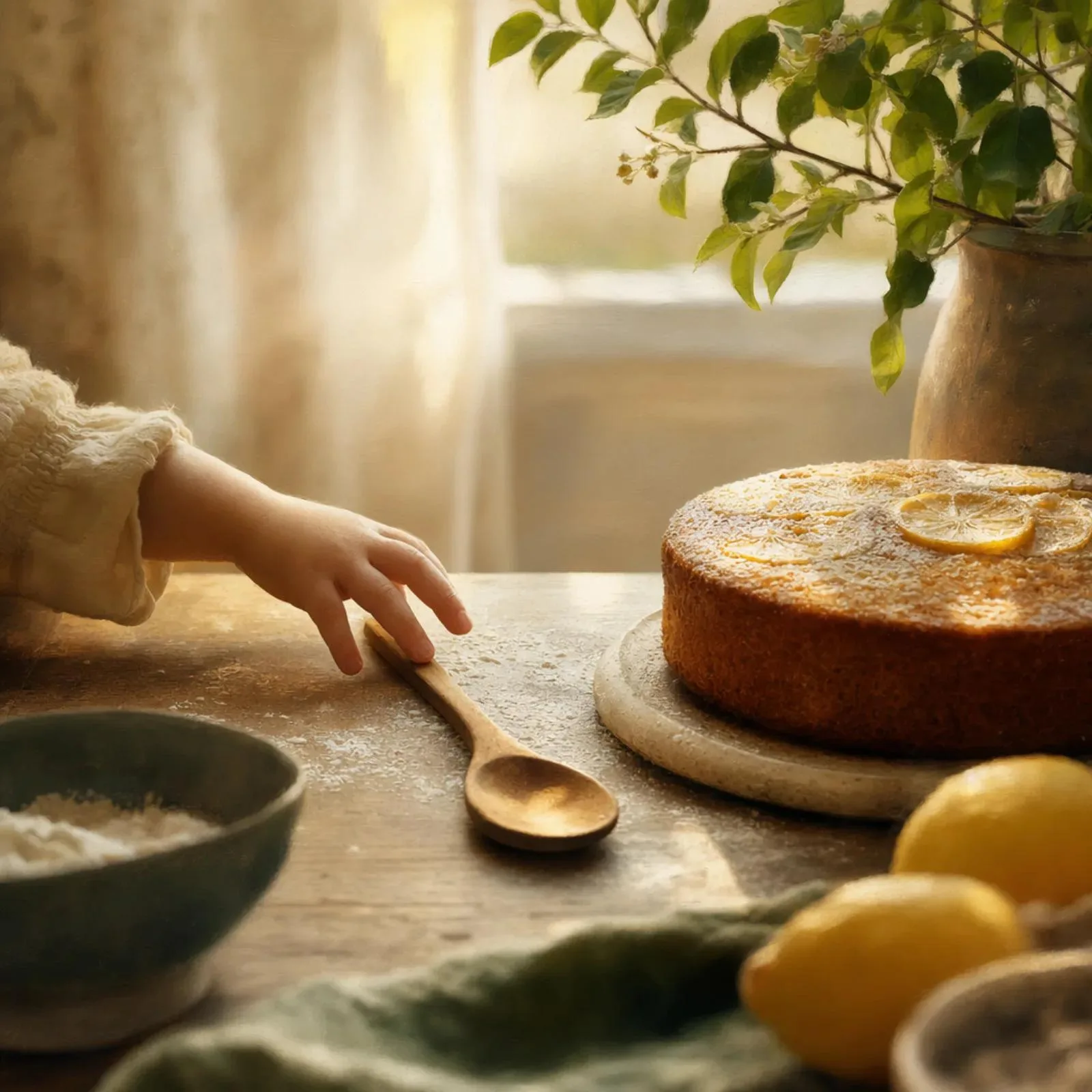
I remember the one time I ran a baking-from-home business. Baking used to give me such joy — it still does — that I thought I'd turn my hobby into a business. After a few years of effort, it died a natural death. Turns out, I was an excellent baker, a rubbish businessperson! I can still remember the sting of failure I felt when I finally shut down the social media account, threw away the flyers and called it a day. Over the years though, I've learnt to look at the situation differently.
It was a fantastic experience — one I wouldn't trade for anything else in life. It was important for me to learn the art of letting things be. The perfectionist in me hardly ever used to take up new ventures or risks for the fear of failure. So I went to pastry school, spent a lot on educating myself in the craft of baking, I invested a lot of money in buying professional baking equipment — basically prepared myself in all manner of ways against the possibility of defeat. I even paid a professional to create a logo for me and set up a website and printed flyers — all of this was before the age of AI when such things cost money, time, and effort. Only after being armed with all this did I take my first step. And yet, it did not turn into a thriving business that I'd hoped to create. Did I enjoy the journey while I was at it? Perhaps just 50% of it — the baking part. And that too became stressful sometimes when deadlines got uncomfortable.
If not for this experience though, I would not have any insight into goal-setting. Nor into not taking them too seriously. I would not have sought meditation to get familiar with the workings of my mind. I would not have known that my 'worth' as a human being is not dependent on how well I do professionally in a chosen field. I would not have discovered the courage to keep trying new things and taking risks. I would not have known what it's like to have fellow travellers on the same journey and to deeply connect with them. I would not have rediscovered the childlike curiosity within me. I would not have seen the value of having patience for allowing things to unfold in their own time. I would not have known how easy it can be to dust yourself off and begin again when you fall. I would not have seen myself grow from strength to strength and become a different person from the one who started on this path.
I'm not saying that any of this happened overnight. Or that it was easy. Simple, yes. Easy, not so much at the beginning. Or that I will not meet more unsuccessful undertakings. But what I do know now is that I'm ever more ready for what life throws at me. It's not that my life circumstances will change or only easy things will come at me because of these inner transformations. It's just that I've built resilience over time to face the same situations and not be fazed by them. Not to let them define the quality of my life. I've changed my relationship to the outcomes of most of my endeavours and simply learned to revel in the moment-to-moment unfolding of life.
Let me end with the parable where a kingdom was ordered to cover the entire land with leather so that no one's feet would be hurt walking the earth. Since that was an impossible task, an easier solution was to cover the feet of the people in leather shoes. So I'm slowly learning to walk in these leather shoes. Sometimes they're uncomfortable so I take them off. Other times they just slip off while I'm walking and I'm caught unawares. Yet other times, I forget that they're there altogether.
Simple, yes. Easy, no. Interesting, absolutely.