The Buddha described two kinds of hurt. The first is the arrow that strikes you – the loss, the diagnosis, the argument, the slight. That arrow lands whether you want it to or not. The second is the arrow you reach for yourself and drive in deeper. Most of what we call suffering is the second arrow.
Perhaps you have seen this unfolding in your life multiple times in different ways.
A physical sensation arises in the body. A twinge in the knee. A tightness in the chest. A persistent ache in the lower back. This is just the body signalling like it usually does – cells, nerves, tissue. At this stage there is no story, no meaning. Just sensation. This is the first arrow, and it is the only unavoidable one.
Before the mind has even formed a thought, the sensation has already been classified: unpleasant. Not “bad” in a moral sense – just the raw quality of aversion. The body contracts slightly. There is a pulling away. This happens faster than conscious thought, and it is also not yet suffering. It is simply the nervous system doing its job.
Now the mind reaches into its archive. It has felt something like this before, or heard about something like this, or read something frightening about something like this. It begins to name: this is the knee that hurt last year. This is the kind of pain people describe before they discover something serious. The sensation is no longer just sensation – it has become a sign, a signal, a symbol pointing toward something the mind is already afraid of.
Now this scenario you’re describing starts to fully unfold. The mind imagines the diagnosis. It fast-forwards to the worst case. It rehearses the conversation with the doctor, then decides not to have it. It calculates what treatment would mean – the disruption, the confirmation of what it fears, the loss of the life it currently has. Avoidance feels like self-protection here, but it is the second arrow going deeper. And then the judgment arrives: I am the kind of person who avoids. I am weak. I am irresponsible. I should know better. The pain in the knee is now a verdict on the self. One physical sensation has become an entire identity.
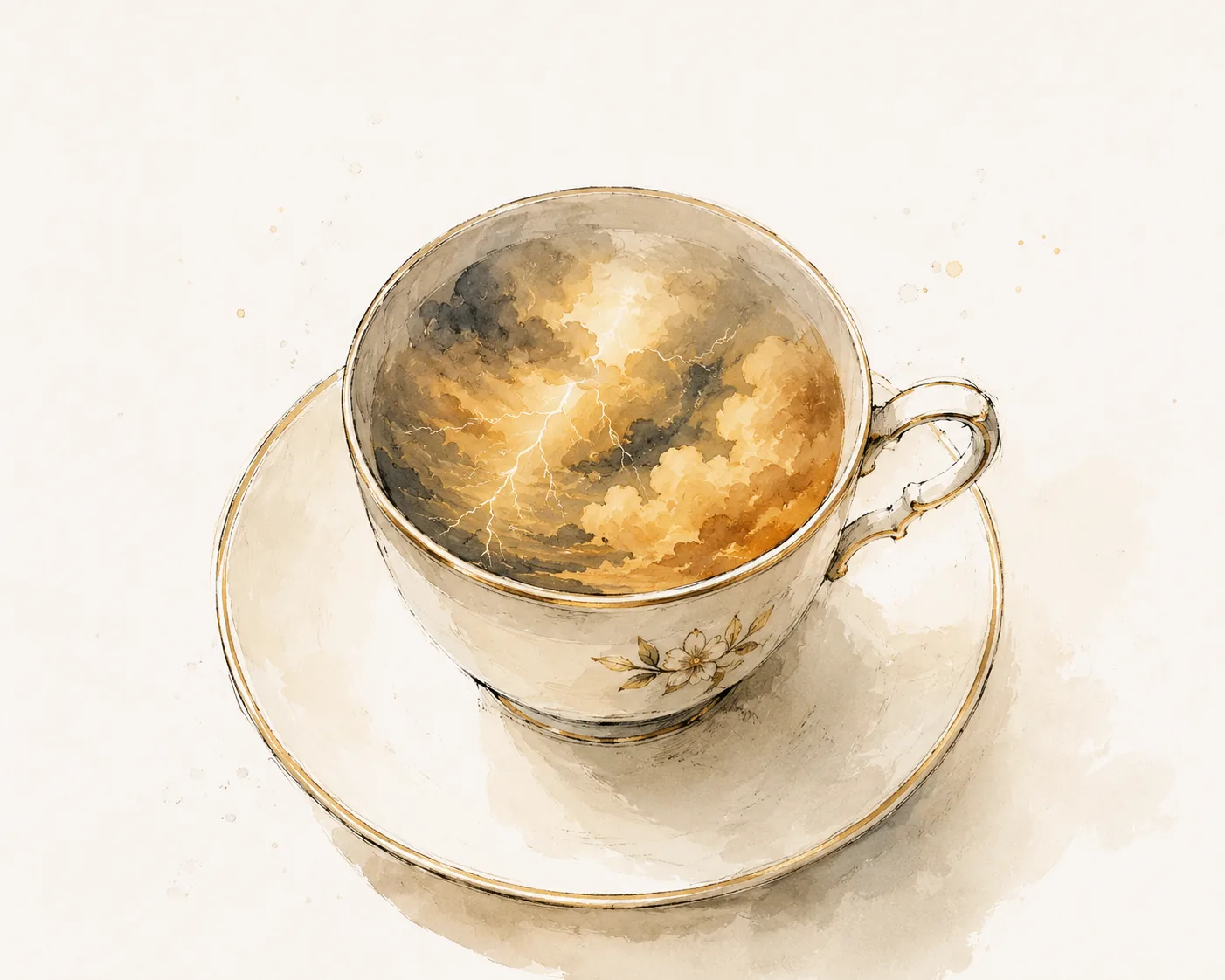
By now, you’re experiencing not a sensation but a world – a world in which the body is failing, the future is frightening, and the self is a particular kind of flawed person. This world feels completely solid. It has the texture of fact. And yet every layer of it beyond the first was built by the mind, on top of a twinge, in the span of perhaps a few minutes.
The second arrow isn’t some irrational defect in our minds. It’s the output of systems doing exactly what they were designed to do. Our negativity bias keeps threats salient. We remember them more readily and vividly because this survival mechanism kept us alive.
Rick Hanson’s useful shorthand is that the brain is ‘like Velcro for negative experiences and Teflon for positive ones.’
The Default Mode Network in our brains is very fond of self-referential thinking. Rumination is when it runs negative thoughts in a loop. From a survival standpoint, it was important to evaluate situations when the tribe is all one had. Being ostracised from the tribe meant a threat to life, so the brain evolved to treat social pain with an urgency similar to physical pain. This is the nervous system trying to solve the first arrow by thinking about it harder.
So if the second arrow seems to be encoded in us, how do we find freedom from it? By beginning to notice and name it.
“How dare he say this to me?” – second arrow.
“I’m always going to be like this; I can never change.” – second arrow.
“Oh I’ll show them! Then they’ll know not to mess with me.” – second arrow.
We simply notice it and then give it permission to be. We don’t add yet another layer by judging it, by fighting it, by wishing it away, by suppressing it or escaping it. We recognise it as an evolutionary feature built to protect us. It’s a practice of gradual recognition, not instant transformation.
In the words of Pema Chodron, “It may take a long time to learn not to shoot the second arrow. We are re-acting… acting out an old habit that’s hard to change. But we start to notice the shenpa, and we start to remember the promise – the promise to respond instead of react, to not make things worse, to add more kindness instead of more reactivity.”
Given that I know all this, have I stopped shooting the second arrow into myself? No. I am much kinder to myself though. When it happens, and it does, it does not have the charge of a moral failing. It feels more like the weather; something that arises, has a pattern, and can be met with a degree of compassion.